
Fire Lookout Friday: The Toughest Physical Climb
There's a fire lookout there?

After visiting all of Washington’s remaining historic fire lookouts, all 93, people often ask me: which one was the toughest to reach?
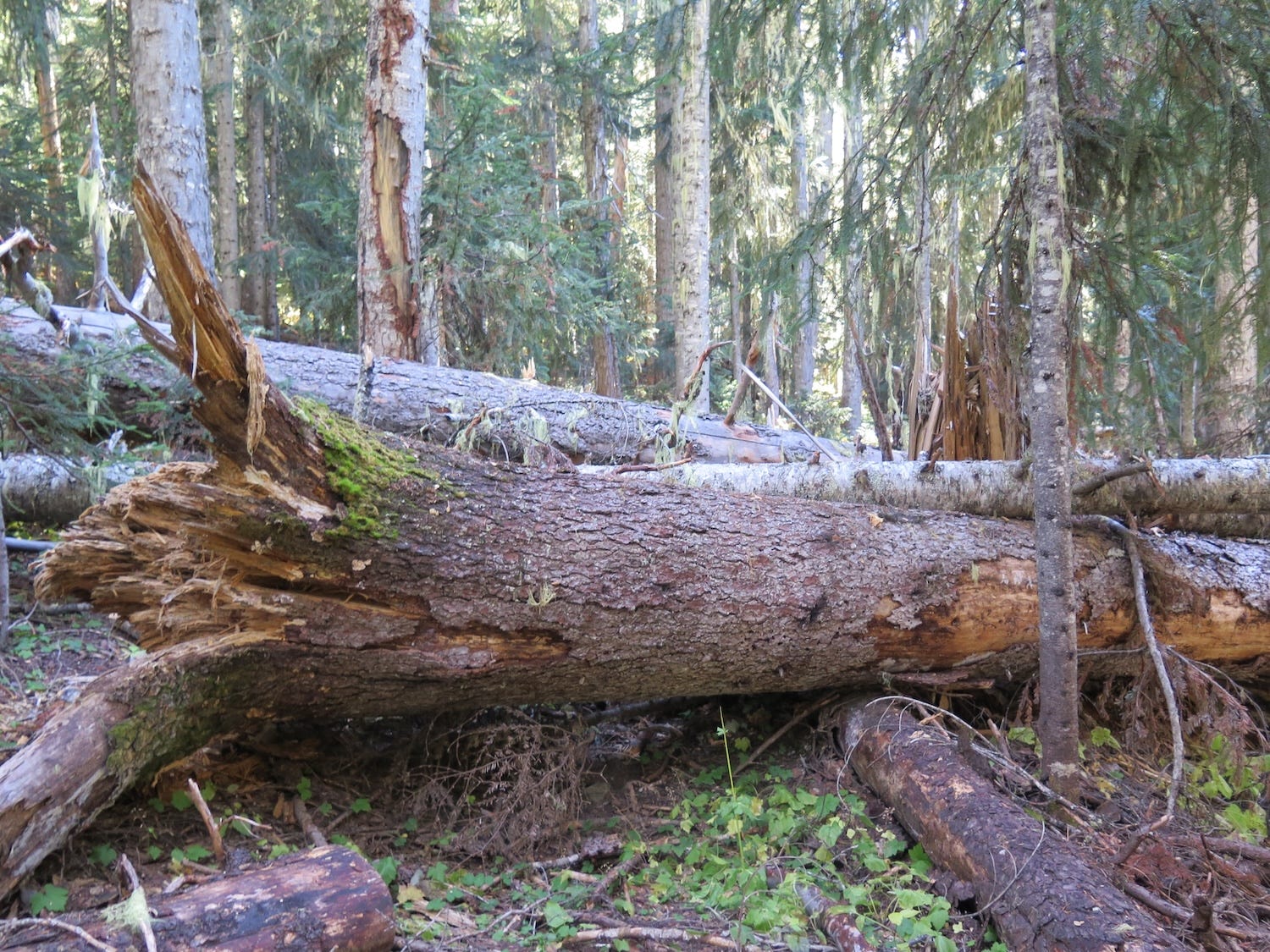
It’s not a simple answer. Some are tough for completely different reasons. The Yakama Nation lookouts like Satus and Signal are impossible to visit without permission. Others are tough because of conditions, like Mebee Pass, where I had to hurdle over 100 downed trees, bushwhack through slide alder, and ford Granite Creek to reach the lookout. And others are tough because of route finding, like Strawberry Mountain in the Colville, which begs you to choose your own adventure.
But the toughest physical outing to a fire lookout? No question. For me, it was Mount Adams.
And partly because I was stubborn enough to do it car-to-car in a single day. All 12 miles and 6,700’ of climbing.
Wait, there’s a fire lookout on Mount Adams?
Yes. There really is!
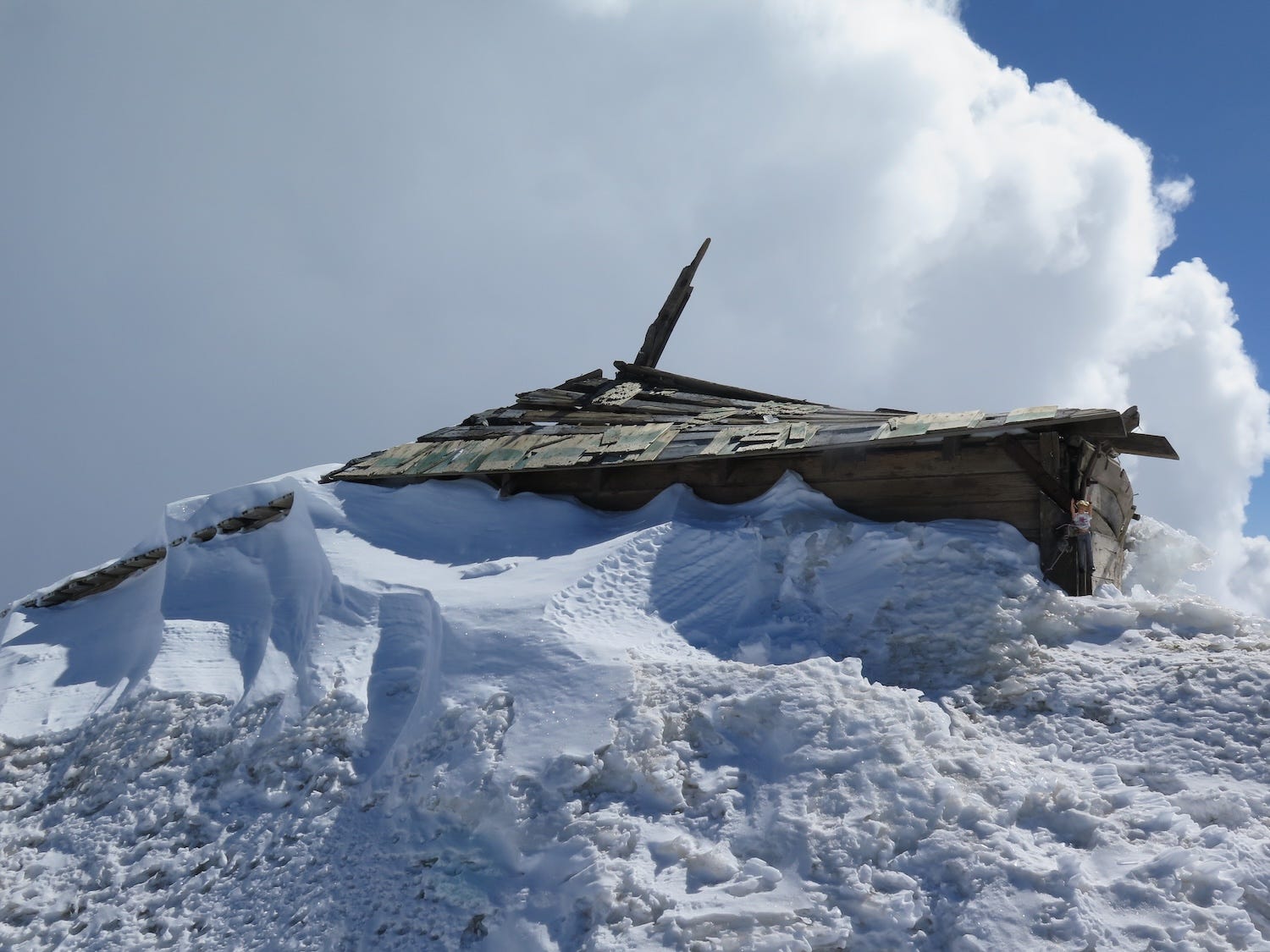
High on the summit of Mount Adams sits the battered remains of a 100-year-old D-6 cupola lookout (108 years old as of 2026), still intact enough to be considered the highest elevation lookout structure remaining in Washington State. Many climbers have no idea it’s there. For most of the year, it’s completely buried in snow and ice, only revealing itself during a brief window in late summer in dry years.
Which, of course, meant that’s exactly when I had to go. I couldn’t climb Mount Adams and not see the lookout.
Mount Adams is one of the handful of fire lookouts I didn’t visit solo. Most of my experience is hiking, route finding, and light scrambling. Although Adams is generally considered a non-technical climb, it’s still a Cascade volcano that can be plenty technical in the wrong conditions or for the inexperienced.
I felt much safer climbing Adams with a partner. The problem is that no one in their right mind wants to climb Mount Adams late in the summer when there’s virtually no snow because it basically becomes a craptastic volcanic rock and scree climb.
Introducing my friend Annette…
This is where you meet my friend Annette—mountaineer, rock climber, and general outdoor badass. If you even begin to mutter “hey, I have an idea and it’s probably not a good one…,” she’s already putting her boots on before you can finish the sentence.
Annette has soloed Mount Rainier. She’s climbed it many times, ticked off serious mountaineering routes, and possesses a level of fitness and willpower that is, quite frankly, offensive to us mere mortals. If I were ever stranded in the wilderness, she is the person I would want beside me. She would survive on sheer willpower alone, and probably make it look effortless while doing it.
Over the years, Annette and I have had some truly memorable adventures.
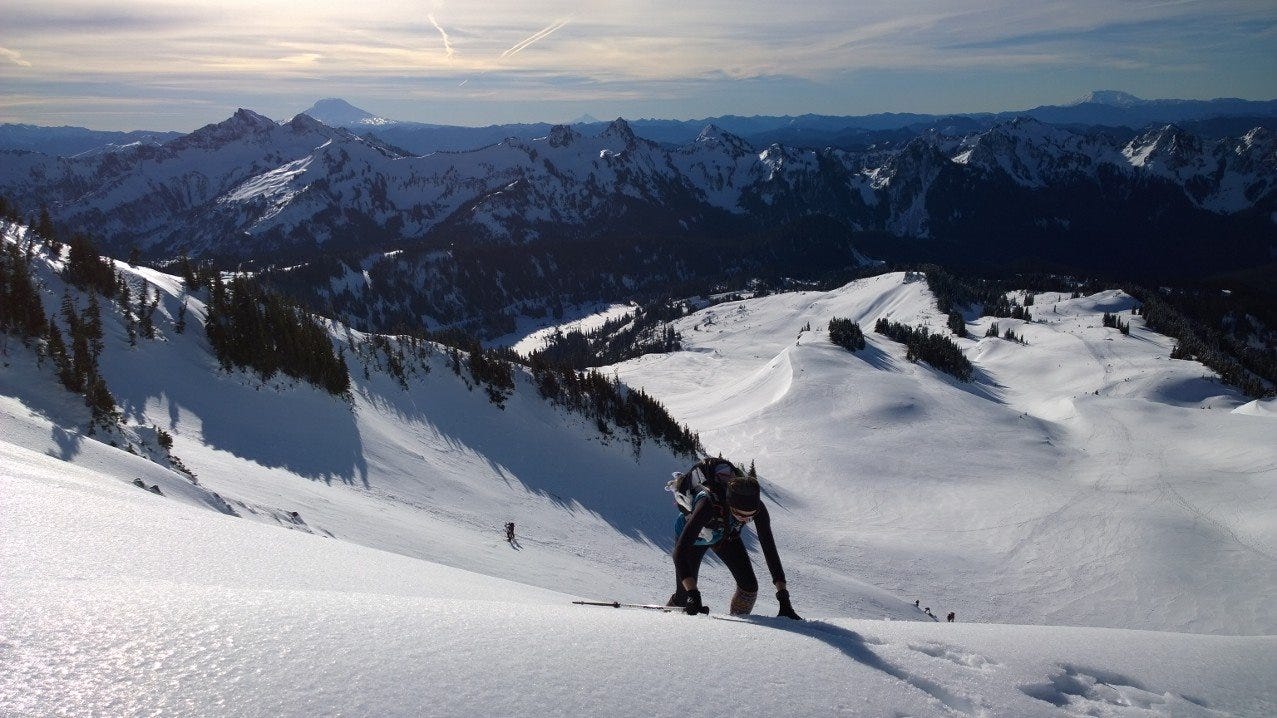
There was the time she led me up to Camp Muir on Mount Rainier, on a route that I can only describe as the steepest, most heart-attack-inducing snow slope I have ever been on in my life. Halfway up, gripping my ridiculous trekking pole with white knuckles, desperately trying to carve steps out of the snow slope I was certain I was going to die on, I somehow made it. And when I reached the top, she mentioned, almost offhandedly, that we really didn’t need to go that way and that we’d take a different route down. I’m still processing that one.
There was the Lake Serene trip where we both rode motorcycles to the trailhead because why not? Annette tripped and fell on her face on the rocky trail, bloodied herself up, and then completed the hike anyway. We rode motorcycles home. This is completely normal for her.
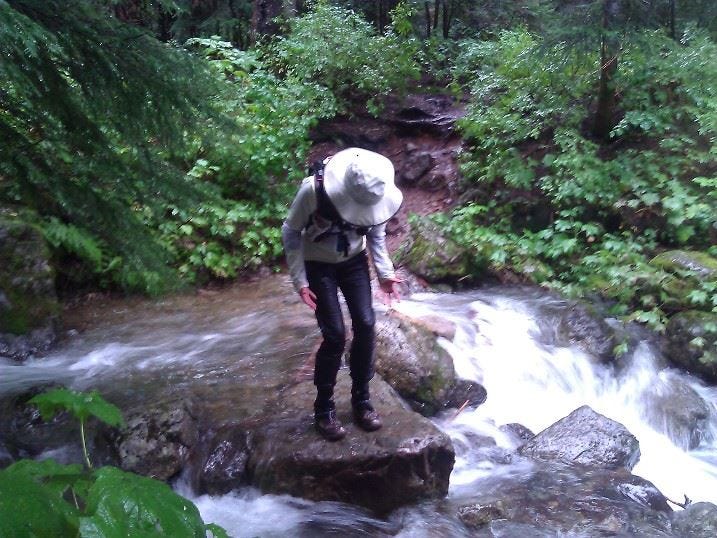
And then there was our hike to Rampart Ridge near Snoqualmie Pass in September 2013, where we didn’t let a storm forecasting 5+” of rain in the mountains stop us. It seemed like a good decision at the time. What followed was one of the most spectacularly miserable hikes I’ve ever experienced, wading through rushing streams, soaked to the bone, and nearly hypothermic. I still savor the photo she took that proves the general spirit of this outing.
I wrote about that trip in 2013 and said “Annette + me + our 3 dogs + any sort of outing = some ridiculously stupid adventure.” Twelve years later, this remains the most accurate equation I have ever written.
But here’s the thing about Annette: she doesn’t take no for an answer. Not in a reckless way. She’s one of the most capable people in the mountains I’ve ever met. It’s more that she has an uncanny ability to look at you, understand your actual limits versus your perceived limits, and know the difference. She files your excuses silently away and keeps on moving.
So when I floated the idea of a late September summit of Mount Adams, Annette said yes but with one condition: we do it in a day.
The climb began, and immediately humbled me.
I remember starting up from the trailhead full of genuine excitement. That lasted about half a mile, until I made the unpleasant discovery that I had packed twice as much gear as any reasonable person actually needed for a single-day climb of Mount Adams. My pack was absurd and much like the scene straight out of A Walk in the Woods, I found myself promptly jettisoning things into the bushes along the trail. A little here, a little there. “I’ll grab that on the way back.” “Definitely don’t need this.” There was absolutely no way I was hauling all of this stuff to the 12,276 foot summit of Mount Adams.


Minus several pounds of useless luxuries, I felt much better, but late season on Adams is not forgiving. Instead of the smooth snow most people get, you’re dealing with sharp volcanic rock, loose scree, and long grinding climbs where every step feels both inefficient and vaguely insulting. Hours in, we finally started hitting patches of snow, and I looked up and saw what I absolutely was certain was the summit.
“Whew! I can’t believe we’re almost there!” I exclaimed.
It was not the summit.
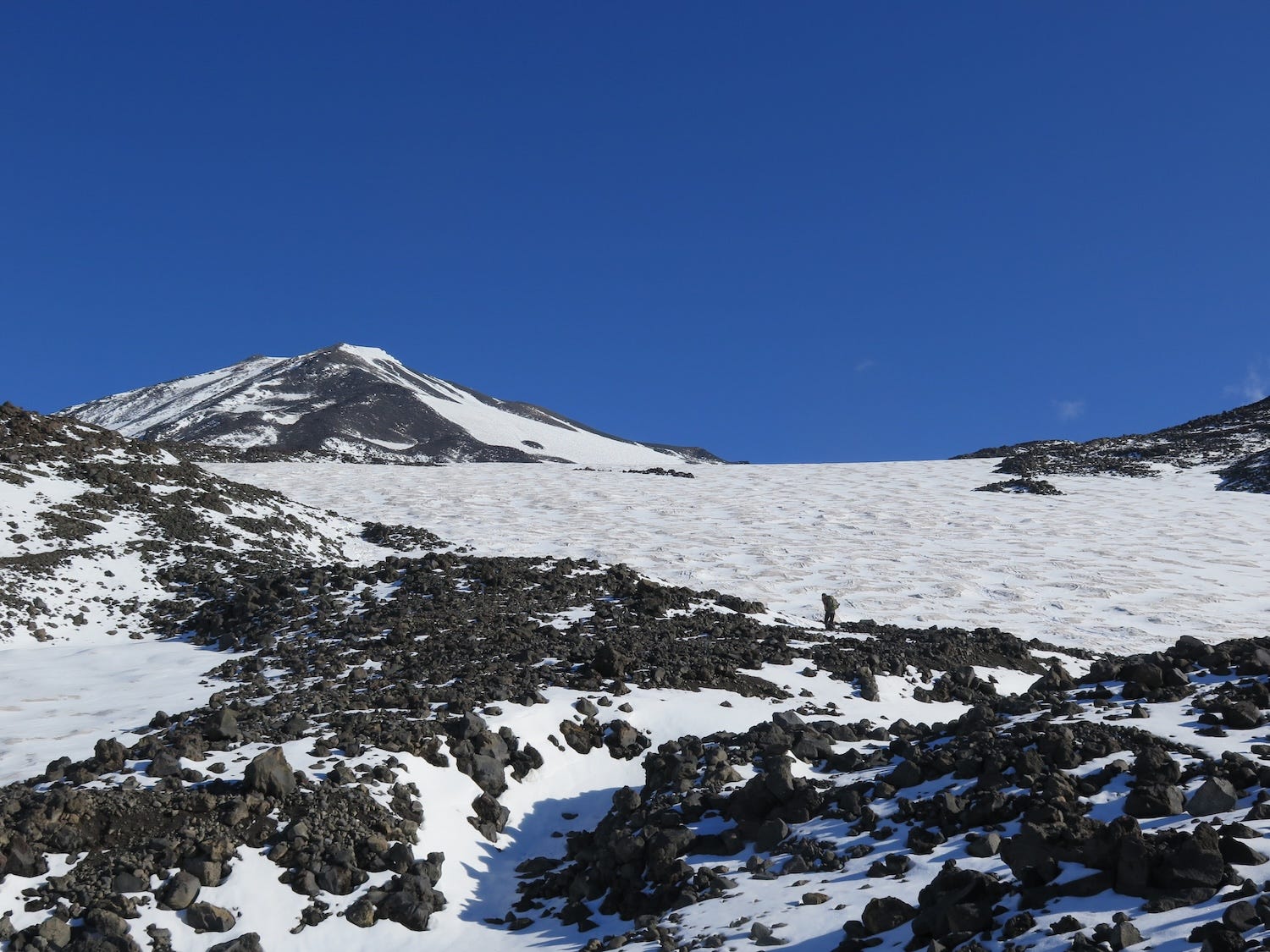
Pikers Peak.
Anyone who has climbed Mount Adams may be familiar with Pikers Peak, the false summit and the cause of much mental anguish. As I crested Pikers Peak, I found Annette sitting on a rock, taking a break. Beyond her, the real summit of Mount Adams stretched unreasonably far into the distance.
“You must be kidding…” I muttered to myself.
Another 600-700 feet of climbing. At least another hour. An impossible-looking ridge full of bare scree. The kind of view that would be beautiful if it weren’t also ruining your day.
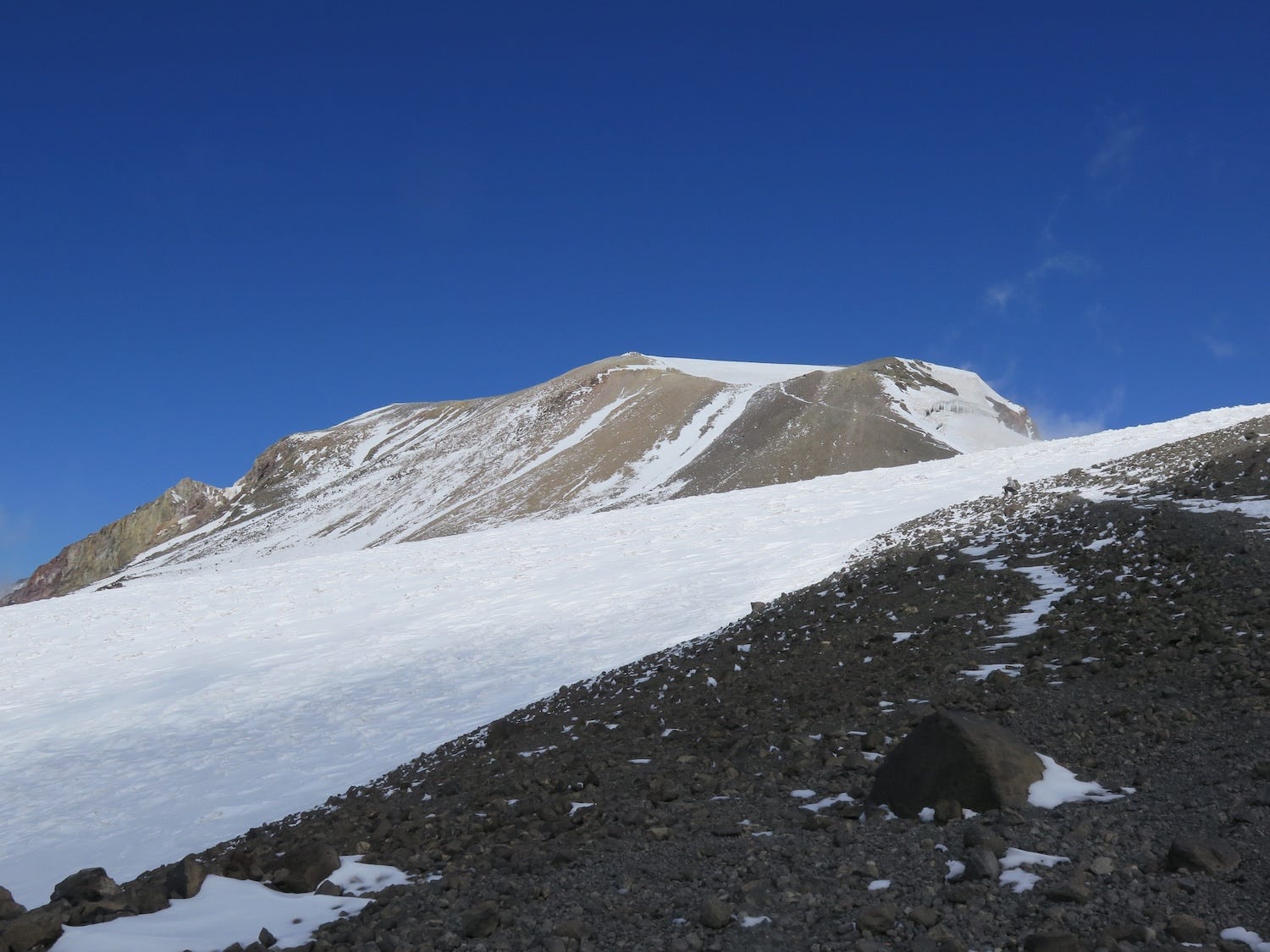
I’ve had some challenging times on hikes, where I’ve had to dig pretty deep to get ‘er done, but nothing like this. I’m still not sure I’ve ever experienced that kind of genuine deflation that swept over me. Not the tired-but-still-going kind. The I am actually really, truly done kind. I sat down next to Annette and said: “I am done. There is just no way I’m getting up there.”
Annette didn’t argue. She didn’t give me a speech. She didn’t even try to talk me into anything. She simply stood up and started walking.
That’s the thing about Annette. There’s no drama, no negotiation, no inspirational pep talk. She just keeps on going. She knew, absolutely, that if she kept moving, I would have no choice but to follow. Because the only thing worse than climbing another 600 feet of loose volcanic slope was the thought of sitting there alone watching her summit without me.
I got up and started walking.
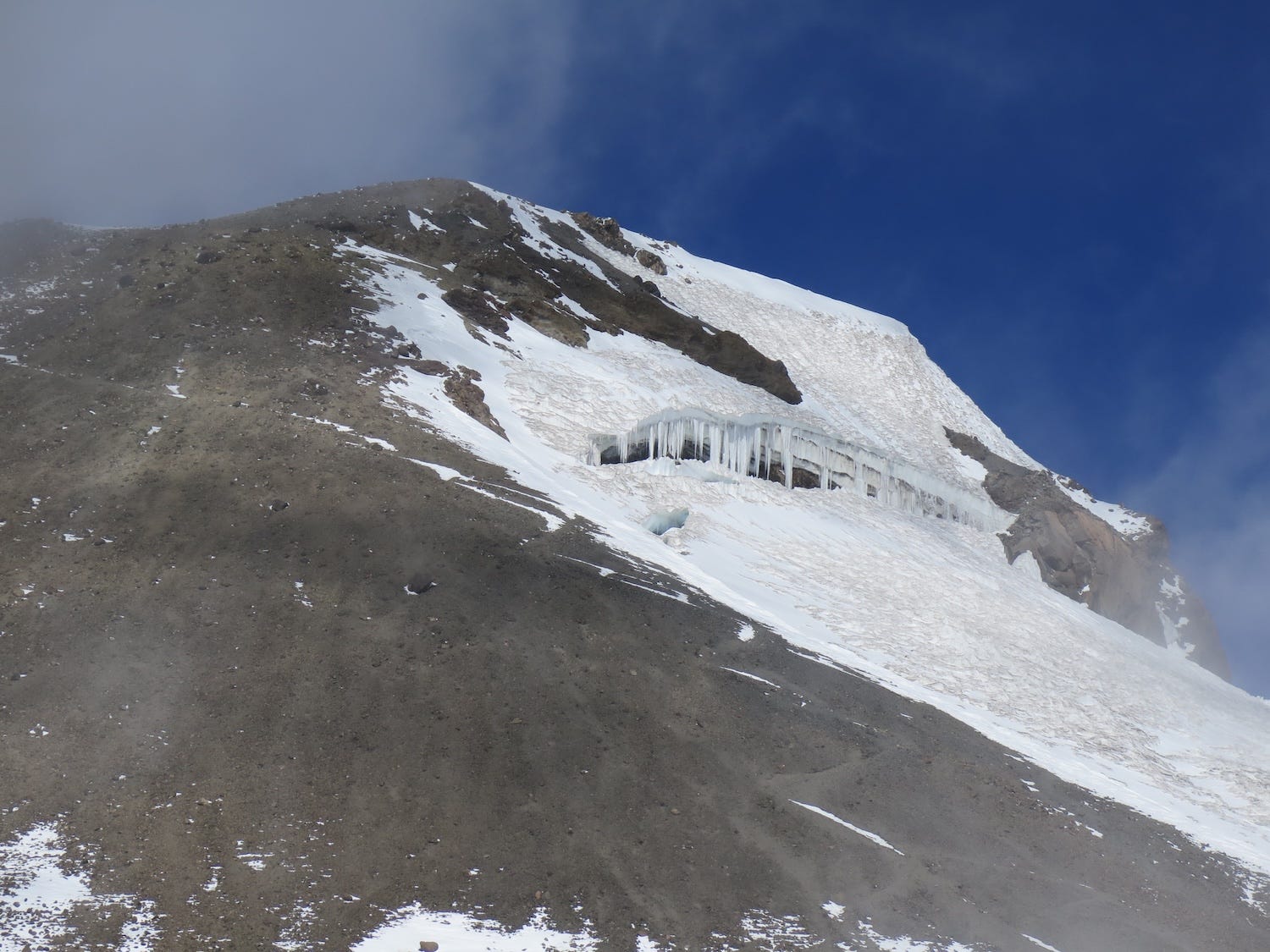
The longest final push.
I really don’t remember much conversation on that last stretch. The snow was melted, leaving a zig-zagging volcanic scree trail up to the summit of Mount Adams. Every step was two forward, one back. There was nothing to do but move.
Step. Slide. Step. Slide.
I put my head down, convinced I was going nowhere, then all of a sudden I looked up, and there was the old tattered lookout.
I could not believe I had made it.
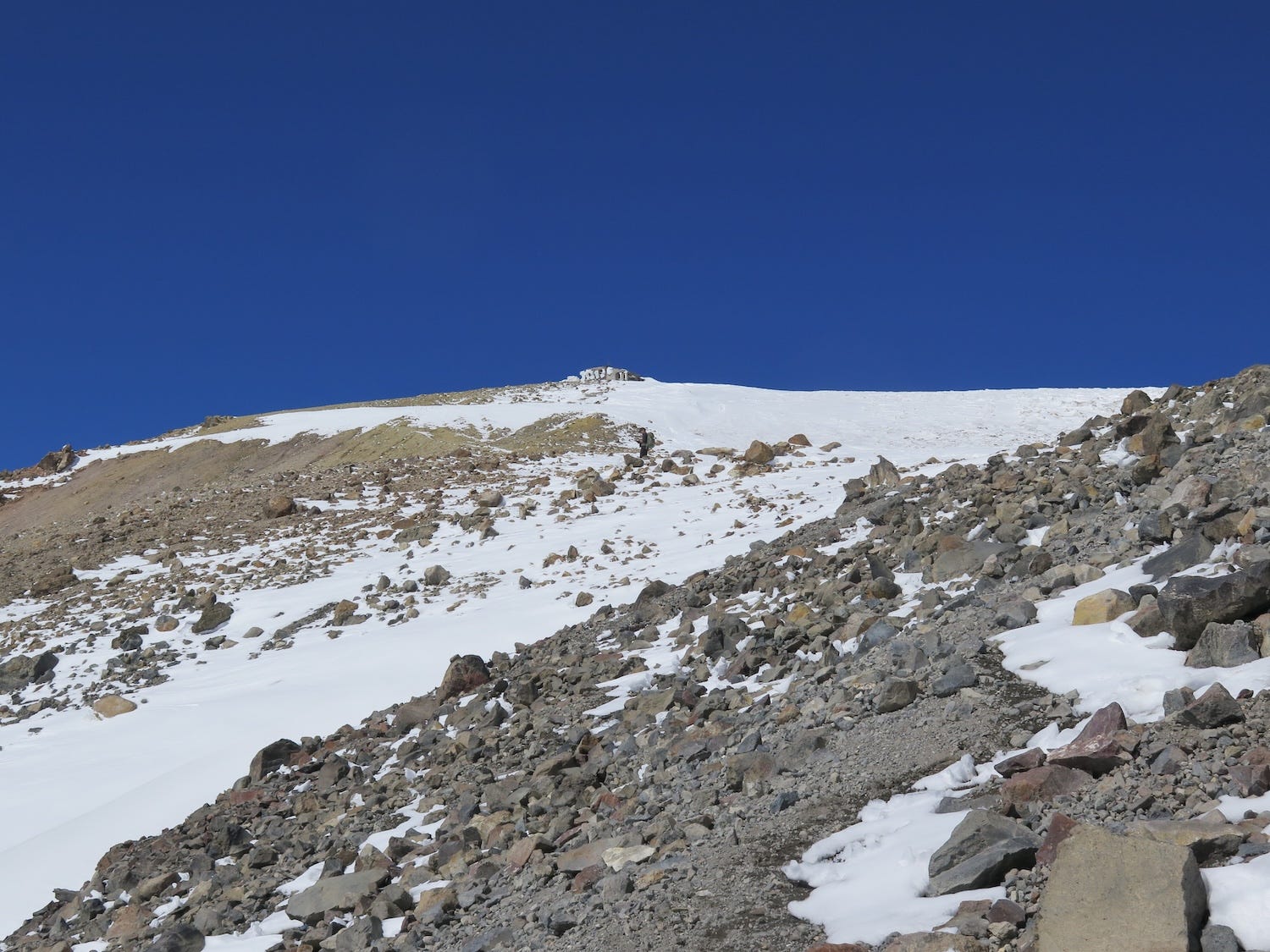
Standing on top of the world.
I grew up in the Midwest. Flat land, big sky, not a volcano in sight. Climbing Mount Saint Helens on New Year’s Day 2015 with two friends was my very first mountaineering experience. The first time I had used the crampons and an ice axe I had bought and trained with months prior. St Helens was, of course, entirely Annette’s idea even though she wasn’t there for that one. She had simply said, you should do it, and so I did.
Mount Adams and Mount Saint Helens remain the only two Washington State Cascade volcanoes I’ve ever climbed, and honestly, probably ever will, which makes the ascent of Mount Adams all the more special.
But then there was the lookout.
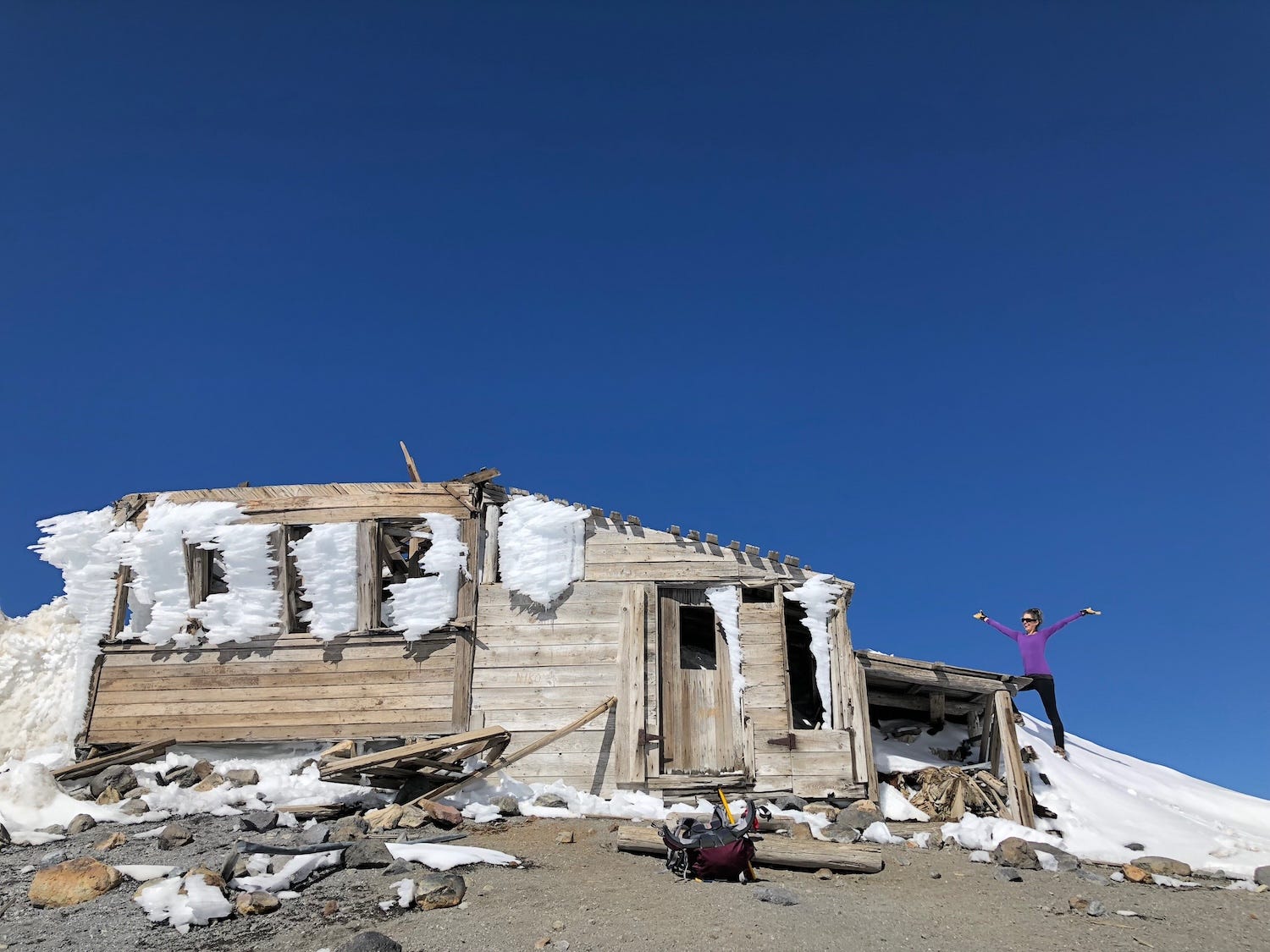
The old miners’ shack and the D-6 cupola remnants were exposed, but still partly buried in snow and ice, the window frames furred with spectacularly wild rime ice, indicating the prevailing wind direction. The whole structure almost seemed part of the mountain, like it had been there since the beginning of time and intended to stay. Which, in a way, it had. Again, most people who climb Mount Adams have no idea it exists. For the majority of the year it’s completely under snow, invisible, forgotten. Climbers stand right on top of it without knowing it’s even there.
You have to time it exactly right to see it at all. And standing there looking at it, I kept thinking: who on earth would build a fire lookout? On top of a volcano? Pioneers in the early 1900s who were much tougher than we’ll ever be, that’s who.


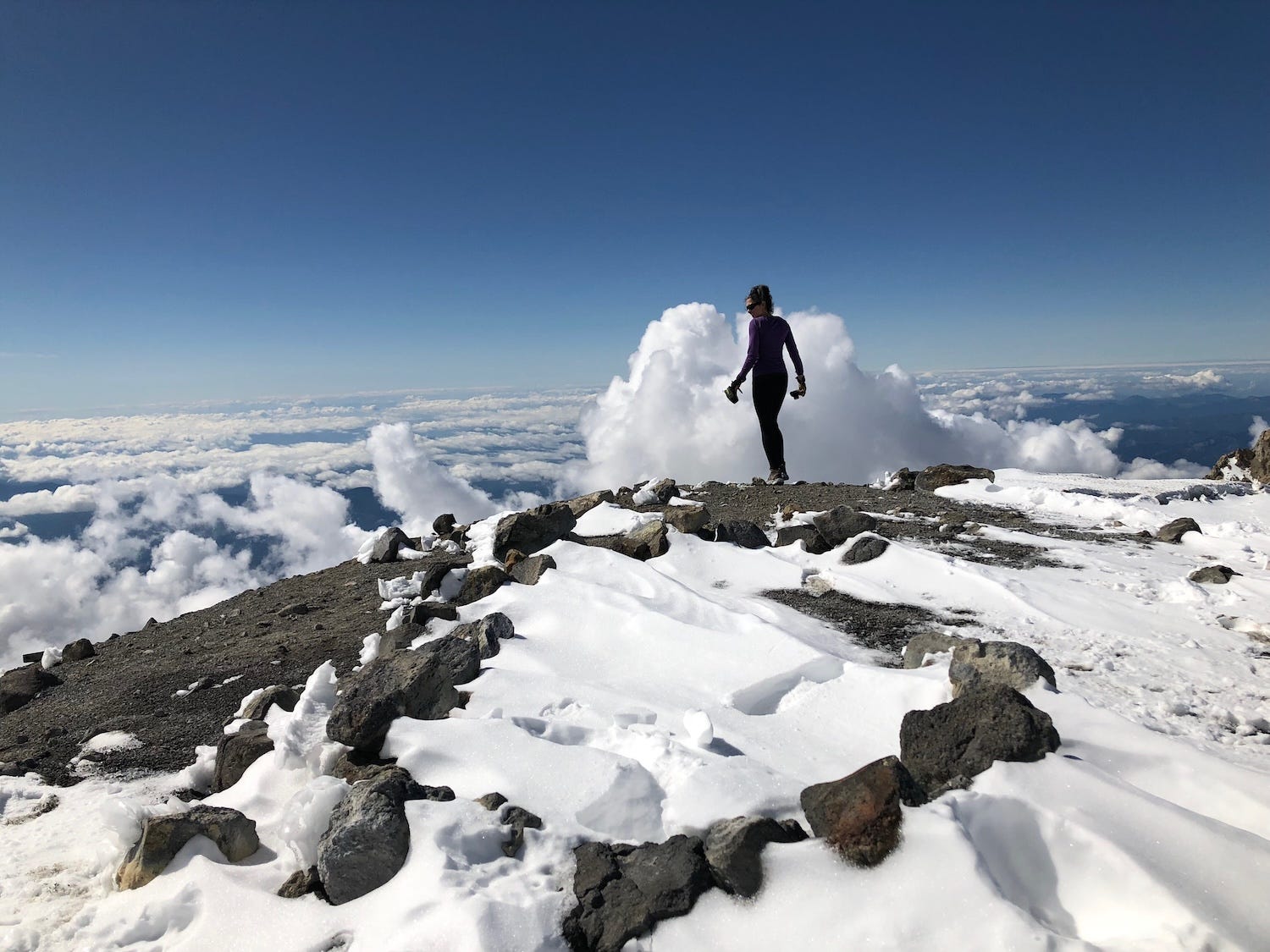
I walked around it slowly, taking photos, trying to let it sink in. The summit was nearly empty. Just Annette, me, and two other climbers far from us. It almost felt like being in an airplane, looking down at the clouds and the terrain below us. Rainier, Saint Helens, and even Mount Hood, stood proudly on the horizon.
Somewhere down there, thousands of feet below and many miles away, my dad had been watching our SPOT tracker all day. He had been so excited about our climb I made sure I had live tracking on so he could follow along. My stepmom told me later that he’d had it on the screen for hours, watching that little dot make its way slowly up the mountain. Knowing he was there and somehow along for the ride made the summit feel even more complete.


And then we went down…
The worst part of a single day summit bid? You still have to get down. We had started our ascent just before 7am, because Annette drove to the trailhead the night before after her full time job and said there was no way we were starting earlier. It had taken me six hours to reach the top. No doubt Annette could have done it in half the time. We spent a quick hour on the summit, then began our descent shortly before 3pm.
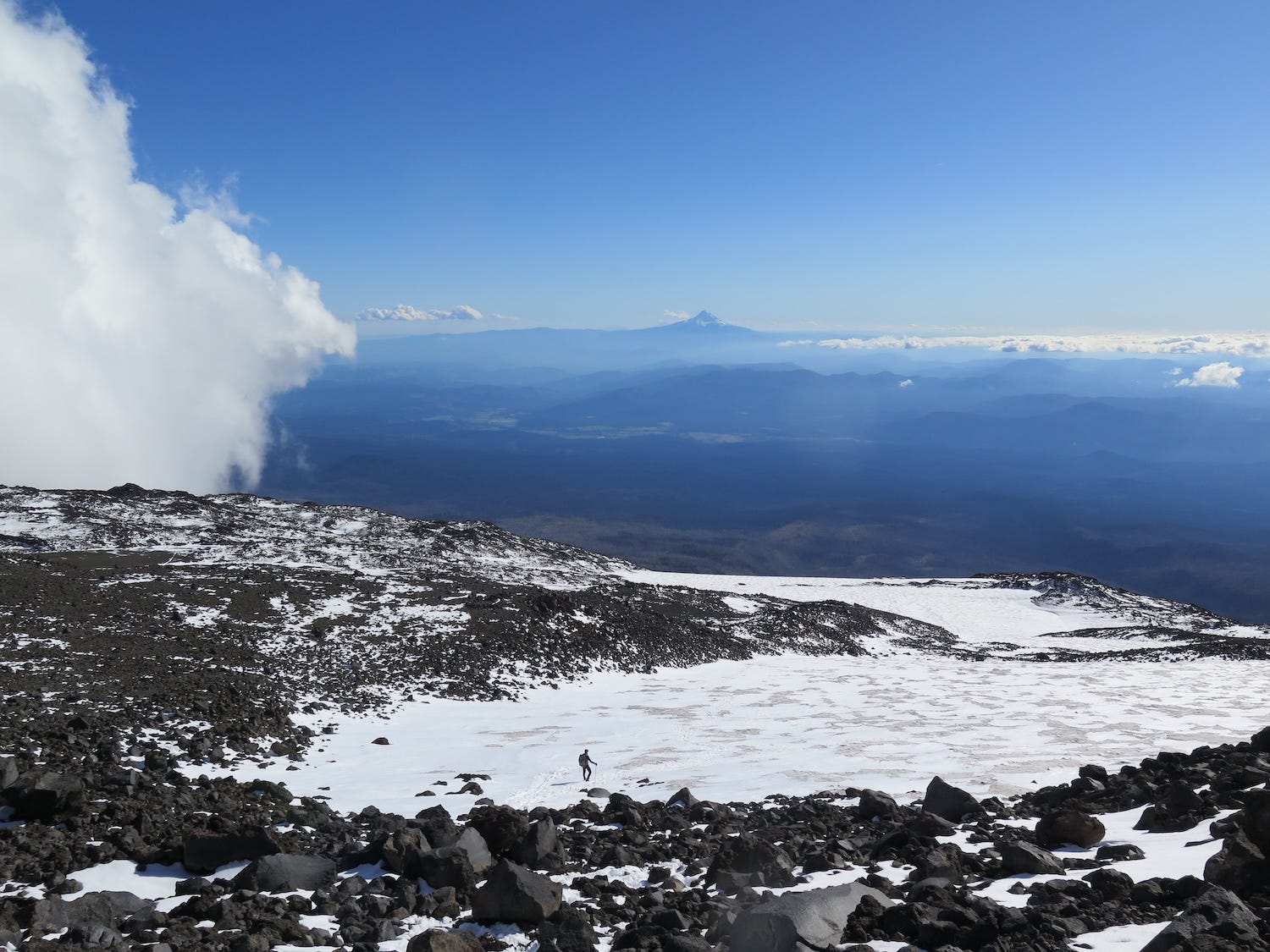
Late-season climbing on Adams doesn’t give you the fun glissade that most people enjoy. It gives you knee-destroying scree and endless rock, turning your legs to complete spaghetti. Somewhere near the bottom, Annette pulled ahead and I didn’t complain. I was wrecked, slow, and thoroughly destroyed. A mile from the trailhead I remembered I needed to find all the spots where I’d jettisoned my gear on the way up. I stumbled around a corner, head down and delusional, and there was Annette, already collecting the pile of stuff I’d thrown into the bushes on the way up.
She is a good friend.
My body was fatigued in a way I don’t think I’ve ever felt before. All I could do was mutter obscenities and stumble along. Two hikers passed me at one point and gave me the kind of look that said is she okay?
It was debatable.
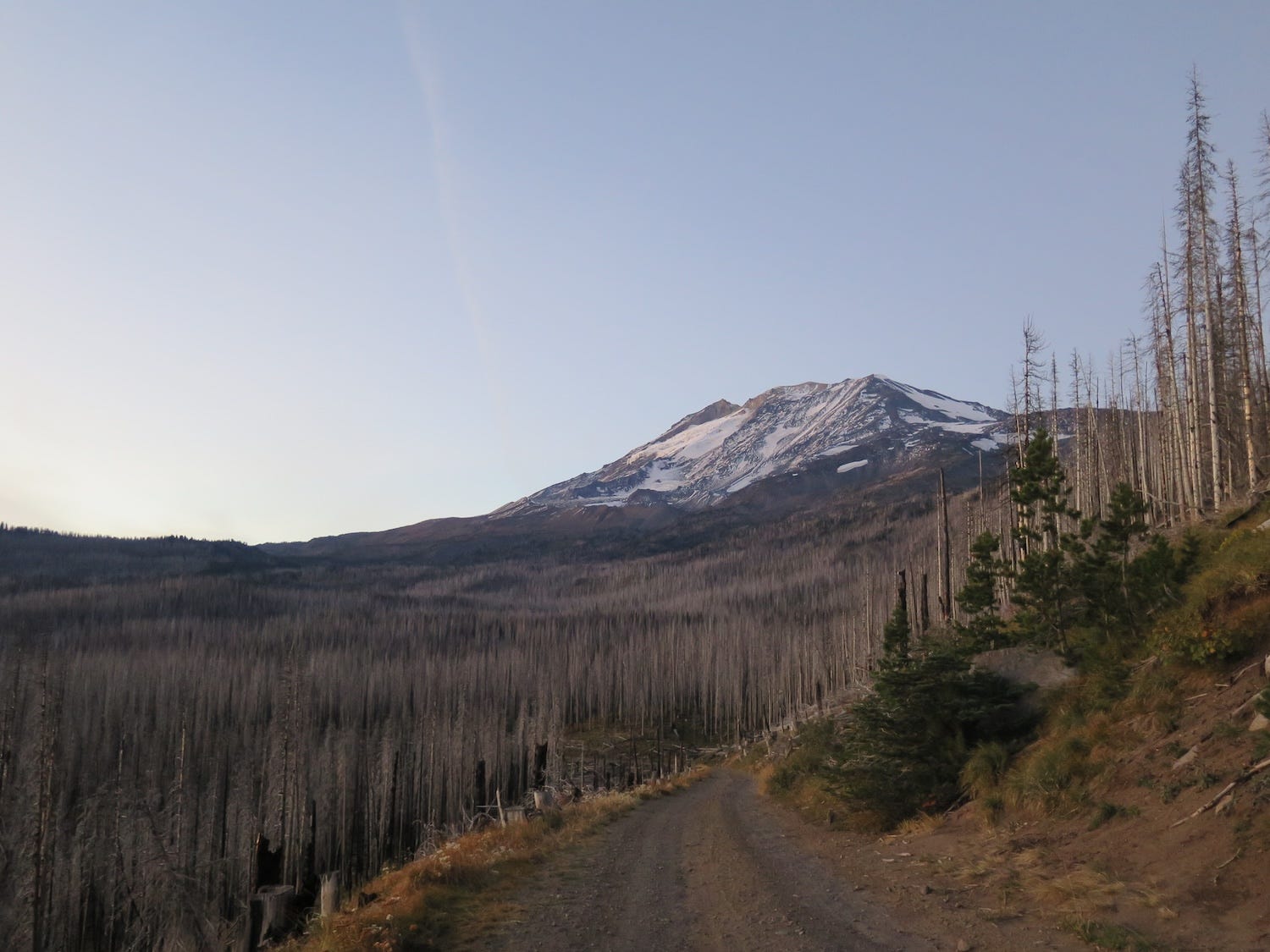
That last mile felt like ten. But eventually, there was the trailhead and Annette already in her car, ready to roll for home, but waiting just long enough to make sure I wasn’t dead out there. I collapsed into the driver’s seat of my Jeep and sat there for a good hour. Then, because apparently I had not suffered enough, I drove all the way home so I could sleep in my own bed.
12 miles. 6,700’ of climbing. A full 13 hour day.
Was it worth it?
Absolutely!
It was one of the hardest physical days I have ever had in the mountains, but also one of the most memorable. Climbing a Cascade volcano is a special experience, made even more so by a fire lookout still standing on its summit. Would I do it again? I love the idea of climbing Adams again, but I absolutely, positively would never do it again in a day. And certainly not at the end of September.
Seeing that old lookout at the summit though? A once-in-a-lifetime experience.
A little history from the summit of Mount Adams
The Forest Service began hauling materials up Mount Adams in 1917 to build the D-6 cupola fire lookout. It took nearly four years to complete. Mules carried supplies to within several thousand feet of the summit, then crews hauled the rest by rope and sled while snow repeatedly buried the structure mid-construction. It was completed in 1922, used only briefly, and subsequently abandoned by 1925. Not surprisingly, visibility from a glaciated summit proved less than ideal for fire detection.
Later, in 1932, miners began extracting sulfur from a summit vent on Adams and while living in the cupola, they added a rustic shack and lean-to, remnants of which still exist. Most of the year, the entire site is buried under snow and ice. If you’ve ever climbed Mount Adams, you’ve likely stood on top of the fire lookout without ever knowing.


Thanks for following along for another edition of Fire Lookout Friday! I’ll see you again next week.
If these stories resonate, I’d love to have you along.
Free subscribers get Fire Lookout Friday each week. Paid subscribers help support these stories and keep this whole adventure rolling—plus a few extras and a little more behind the scenes as this all unfolds.
I appreciate you more than you know. Either way, the herd and I are glad you’re here.